
The government wants to reduce the rate of contribution - part of the employee's share - for a class of workers depending upon age, income or gender, without changing the contribution from the employer's share.

The subsidy will be credited to bank accounts of farmers against cane price dues and are compliant with WTO norms. This will benefit millions of farmers in Uttar Pradesh, Maharashtra and Karnataka.

Under the proposed mechanism, the finance ministry has said banks will notify customers when someone tries to deposit money in their accounts, a government official said.

The slowdown in sowing is mainly because of the delayed onset of the southwest monsoon and its slow progress in June.

However, the areas under paddy - the biggest cereal grown during the kharif season - continue to be less than last year, mainly due to delayed onset of rains and also on account of shift towards the more lucrative maize.

Recent data from market analytics firm Nielsen shows that the rural market in the country's 630,000-odd villages is pulling down the overall FMCG business.

Officials said good rain in August - though it might not improve acreages much for most crops except urad, moong, and paddy - would help in improving yields in the crops already planted.

Low rain coupled with the fact that maize prices in the open market have surged from around Rs 15-16 a kg to almost Rs 25 this year have forced farmers to turn to this crop.

The Bill states a worker will be paid twice his or her wage if he or she is allowed to work overtime. A majority of workers in India worked more than 48 hours in a week, which is higher than the International Labour Organisation's prescribed time-limit.
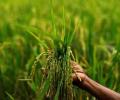
Till July 26, kharif crops have been sown in around 68.87 million hectares, which is 6.43 per cent lower than the area covered during the same period last year.

Garg had refused to sign on the report finalised by the former Reserve Bank of India governor Bimal Jalan-led committee reviewing the central bank's economic capital framework (ECF).
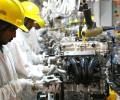
Single registration will be coupled with single licence, along with a single return, for executing projects for five years.

Under the New Code on Wages Bill 2019, employers will be required to give the minimum wages, notified by either the state or the Centre, to the unorganised sector, too.

The high-level panel also asked the government to work towards re-orienting subsidies in a targeted manner from the crop sector to the non-crop sector and redesign the electronic National Agriculture Market.

The groups, including those associated with the ruling Bharatiya Janata Party's parent organisation the Rashtriya Swayamsevak Sangh, have also threatened a big nationwide agitation if growth of illegal GM crops isn't checked.

Government suspects that many of these bank accounts were used to launder money, especially after the demonetisation in November 2016.
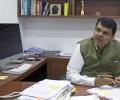
The committee has been tasked to come up with policy measures to boost agriculture exports, raise growth in food processing, attract investments in modern market infrastructure, value chains and logistics.

Till June 30, the southwest monsoon was 33 per cent lower than normal, which is among the worst in the last five years, with 28 of the 36 meteorological divisions recording deficient rain.

The aim of the programme is to increase the water table in the stressed areas through dams, ponds, and afforestation. According to a NITI Aayog study, by 2030, the country's water demand is projected to be twice the available supply, implying severe water scarcity for hundreds of millions of people and an eventual 6 per cent loss in the country's GDP.

After assuming power in 2014 with a full majority of its own, the BJP-led NDA government started an ambitious process of reforming labour laws in the form of codes aimed at making the framework less cumbersome with a variety of alterations. It had planned four codes each for industrial relations, wages, social security and welfare, and occupational safety, health and working conditions. To this end, 35 central labour laws were to be converted into four codes that would have had the virtue of streamlining labour relations. But none of the proposed code Bills could be converted into a law principally because neither trade unions nor industry representatives came on board. They hold the key to India's low-growth-high unemployment paradigm but the government may struggle to push them through this time as well. Somesh Jha explains why
 © 2026 Rediff.com - Advertise with us - Disclaimer - Privacy Policy - Sitemap - Feedback - About us - Terms of use - Grievances